The Norwegian Banking Crisis and Economic Growth
Macroeconomic Overview ← The Norwegian Banking Crisis and Economic Growth The Norwegian Banking Crisis and Economic Growth Event description and historical context The Norwegian banking crisis is a major financial crisis that occurred in Norway and other Nordic countries, such as Denmark, Sweden, and Finland, in 1988–1992. It followed financial deregulation in the 1980s, which helped […]
Policy Analysis Using Macroeconomic Models
Macroeconomic Overview ← Policy Analysis Using Macroeconomic Models Policy Analysis Using Macroeconomic Models Expansionary Fiscal Policy Increase in Government Spending In January 2009, Norway implemented an expansionary fiscal policy in response to the global downturn caused by the 2008 Financial Crisis. The government increased public spending as part of a stimulus package aimed at supporting economic […]
Macroeconomic Indicators and Analysis
Macroeconomic Indicators and Analysis Macroeconomic Overview ← Macroeconomic Indicators and Analysis GDP and economic growth Norway’s real GDP has increased steadily between 1978 and 2025 primarily due to the expansion of the petroleum sector and the state’s fiscal stabilization framework. Nevertheless, there are still some fluctuations over time. Evidence from Norges Bank and Statistics Norway show […]
Bulgaria
Table of Contents Overview Bulgaria is a small country in the European Union with a growing economy, but its income is still much lower than the EU average. The economy is mainly driven by domestic consumption and government investment, while exports remain relatively weak. Unemployment is very low, inflation is moderate, and public debt is […]
Norway
Norway Macroeconomic Overview Norway is a Northern European nation located on the Scandinavian Peninsula and is widely regarded as one of the wealthiest and most economically advanced countries in the world. With a population of approximately 5.6 million people and a nominal GDP of $438 billion in 2024, Norway consistently ranks among the highest in […]
Switzerland
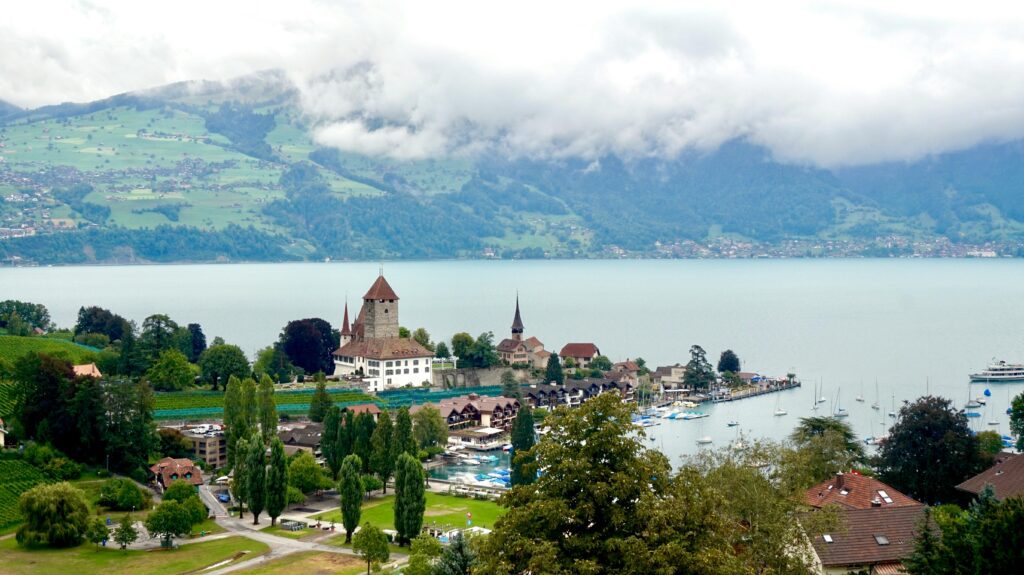
Introduction Consistently ranked high on the human development index and with the sixth highest GDP-per-capita, Switzerland is considered a competitive economy on the global stage. Competitiveness is fueled by the primarily services-based economy, with 74% of its GDP coming from the services sector and 25% from industry. Switzerland has a population of around 9 million, […]
Spain
Country Macroeconomic Overview Spain is a high-income, advanced economy and a member of the European Union and the eurozone. Over the past 50 years, Spain’s macroeconomy has been characterized by a substantial increase in GDP, rising from $40.96B in 1970 to $2.04T in the present day (2026). The Spanish economy is very service-oriented, with […]
Denmark
Introduction Denmark is situated in the Nordic region, drawing strong ties to its neighboring countries in the economy. With a current GDP of $500 billion, Denmark is an advanced, high-income nation known for their advancements in software, business and financial sectors, pharmaceuticals, and renewable energy. Denmark saw tremendous growth in the 1960s during the expansion of the industrial and business sectors, which have continued to fuel the economy. Due to their continued growth, Denmark is […]